• Skip to primary navigation
  • Skip to main content
NC Center for Resilience & Learning

NC Center for Resilience & Learning

Building resilience and success for all North Carolina students and educators.

  • Who We Are
    • About the Center
    • Our Team
    • Where We Work
    • Our Core Values
    • Our Impact
    • Funders & Key Partners
    • Work With Us
  • Programs and Initiatives
    • Resilience & Learning Full Coaching Model
    • One-Time Workshops
    • Virtual Workshop Series
    • Educator Preparation Program Community of Practice
    • Community Schools
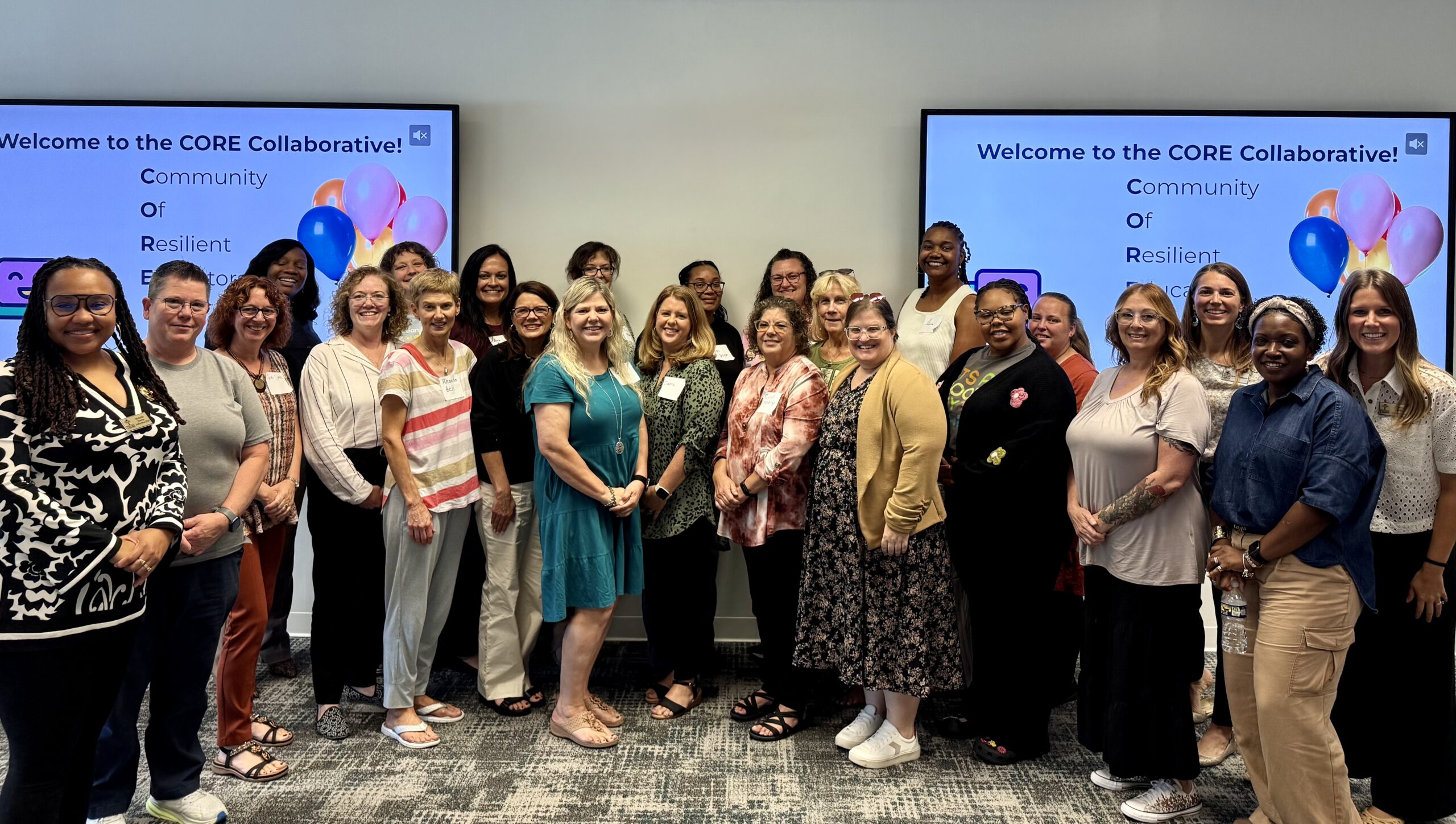
    • CORE Collaborative
    • Resilience & Learning Leaders
    • Research & Evaluation
    • Data Collection
  • Resources & News
    • View All Resources
    • Publications
    • Newsletter
    • In the News
    • School of the Month
  • Contact Us
  • NC Forum
  • Donate

Subscribe to Our Newsletters

Our Impact

Our work transforms school communities. Through specialized training and technical assistance, our partner schools undergo a fundamental culture shift—moving away from punitive discipline to prioritize relationships, safety, and deep connection. By reframing student behavior from ‘what’s wrong with you’ to ‘what happened to you,’ educators equip students with essential regulation and social-emotional skills, keeping them supported and in the classroom where they can thrive.

Quantitative data tell part of the story, but they do not capture the whole picture.
We track outcomes carefully, but we never lose sight of the human stories behind them.
Numbers show progress. Stories show transformation.

The Numbers

57% decrease in discipline referrals
One partner school with 488 students went from 257 discipline referrals to 111 after implementation.
63% decrease in suspensions
Another partner school with 842 students went from 123 suspensions (includes out-of-school, in-school, and bus) to 45 after implementation (based on 4th quarter projections due to Covid closures).
  • 69% of Partner Educators now prioritize the “why” behind student behavior.
  • 70% Partner Educators reported stronger, more positive student relationships.

Our Reach

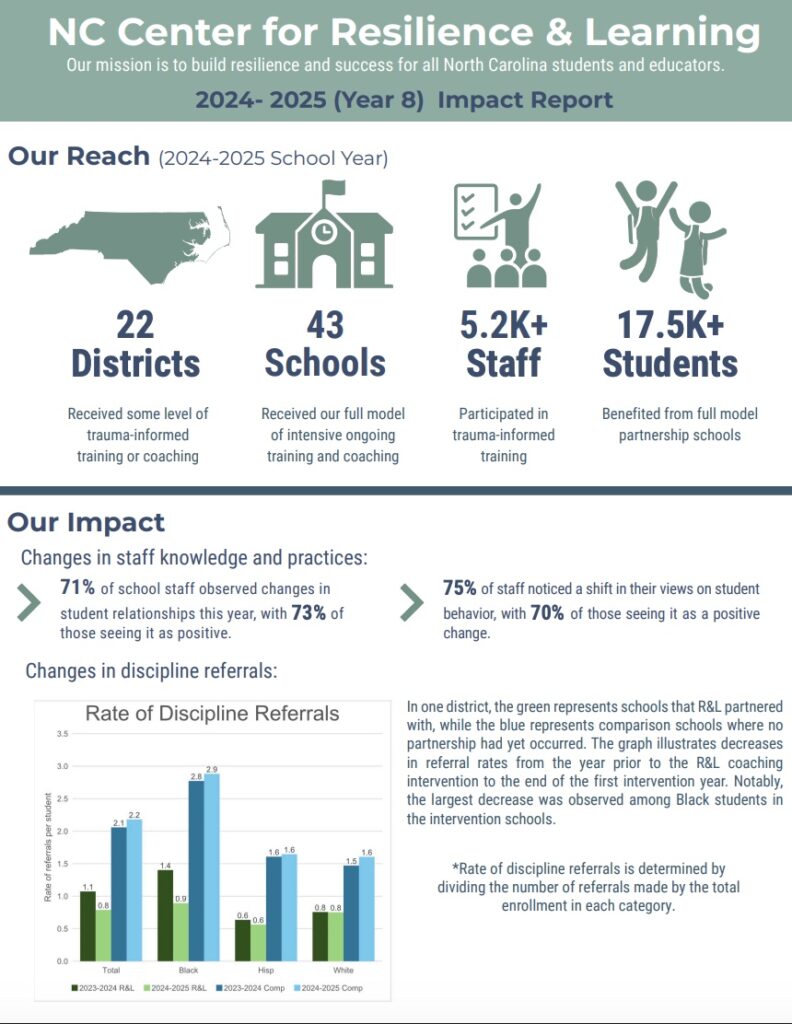
We have partnered with 50 and counting districts to provide some form of trauma-informed training or coaching

We have partnered with 78 schools (and counting) with our full model of year-long intensive training and coaching

We have led trauma-informed schools training with over +6,200 educators

There have been +57,158 in our full model partnership schools where staff have received intensive, ongoing training and coaching

*The majority of our partner schools are Title I, with greater than 90% of students receiving free and reduced lunch

The Stories
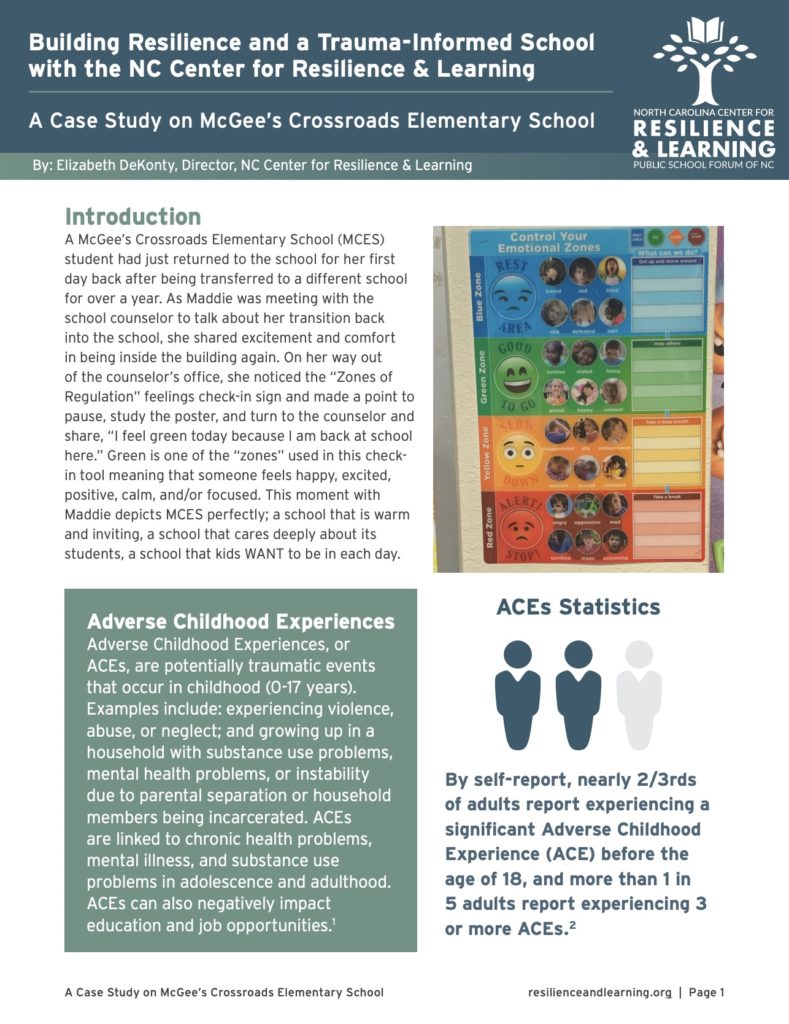
McGee’s Crossroads Elementary School
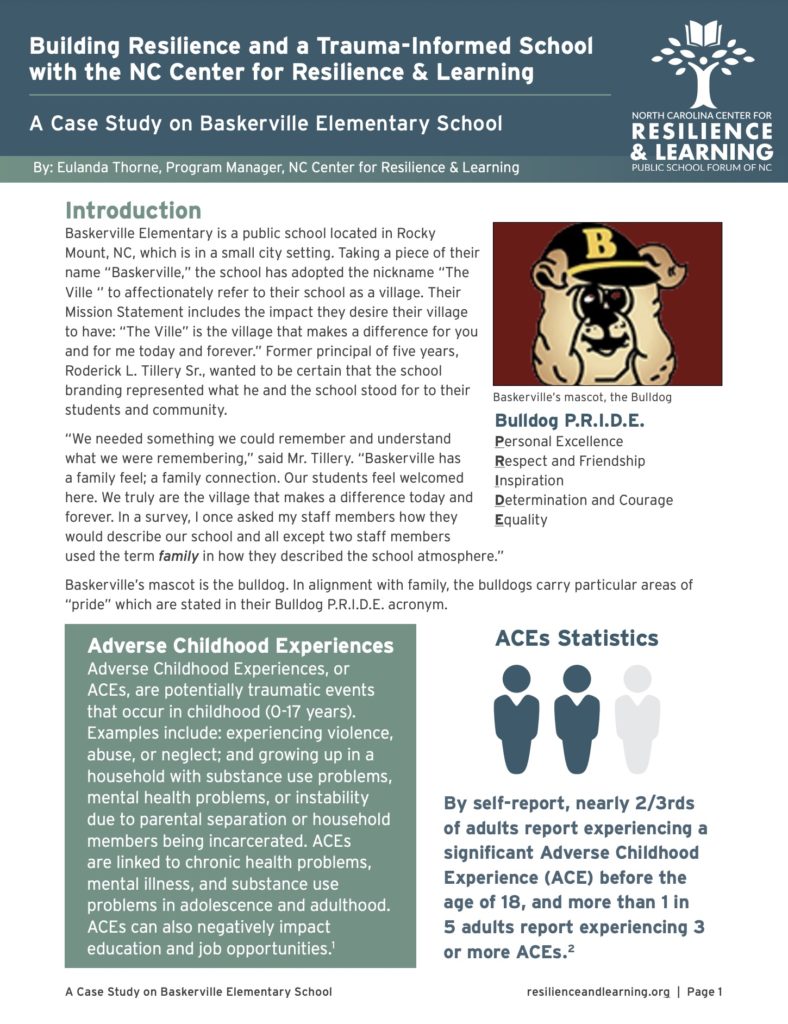
Baskerville Elementary School
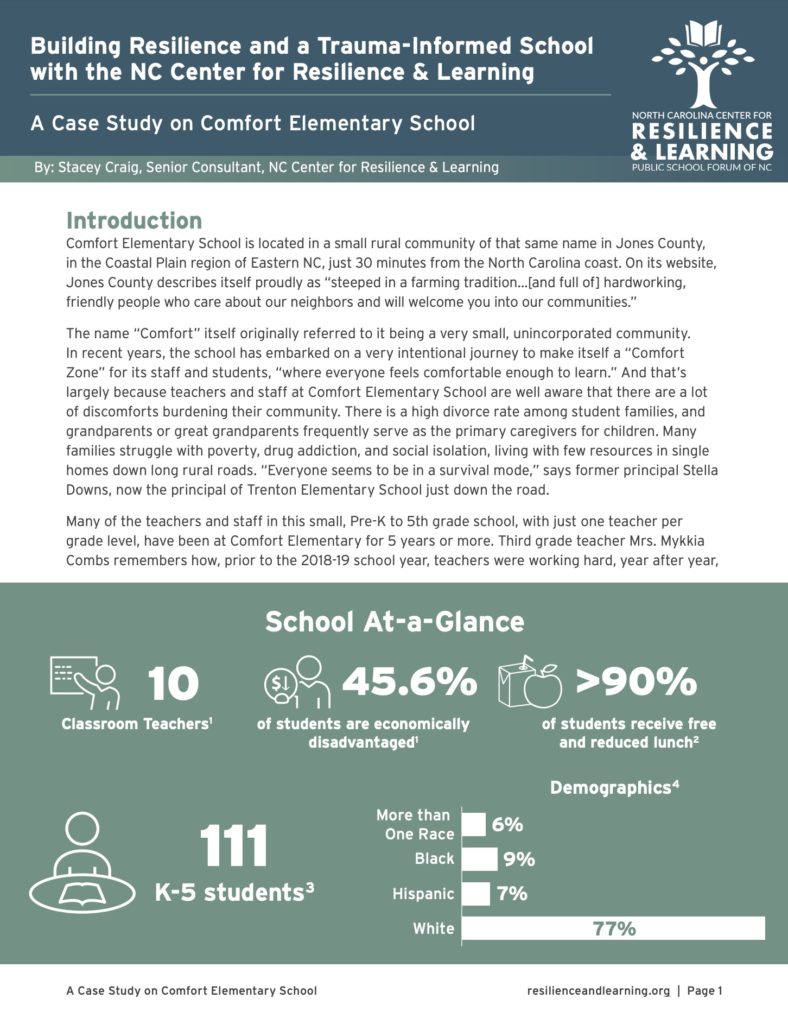
Comfort Elementary School

Research in trauma-informed schools is still in its infancy, and COVID-19 further disrupted data collection and evaluation efforts. Prior to the launch of the NC Center for Resilience & Learning, early findings from other states leading trauma-informed schools initiatives included:
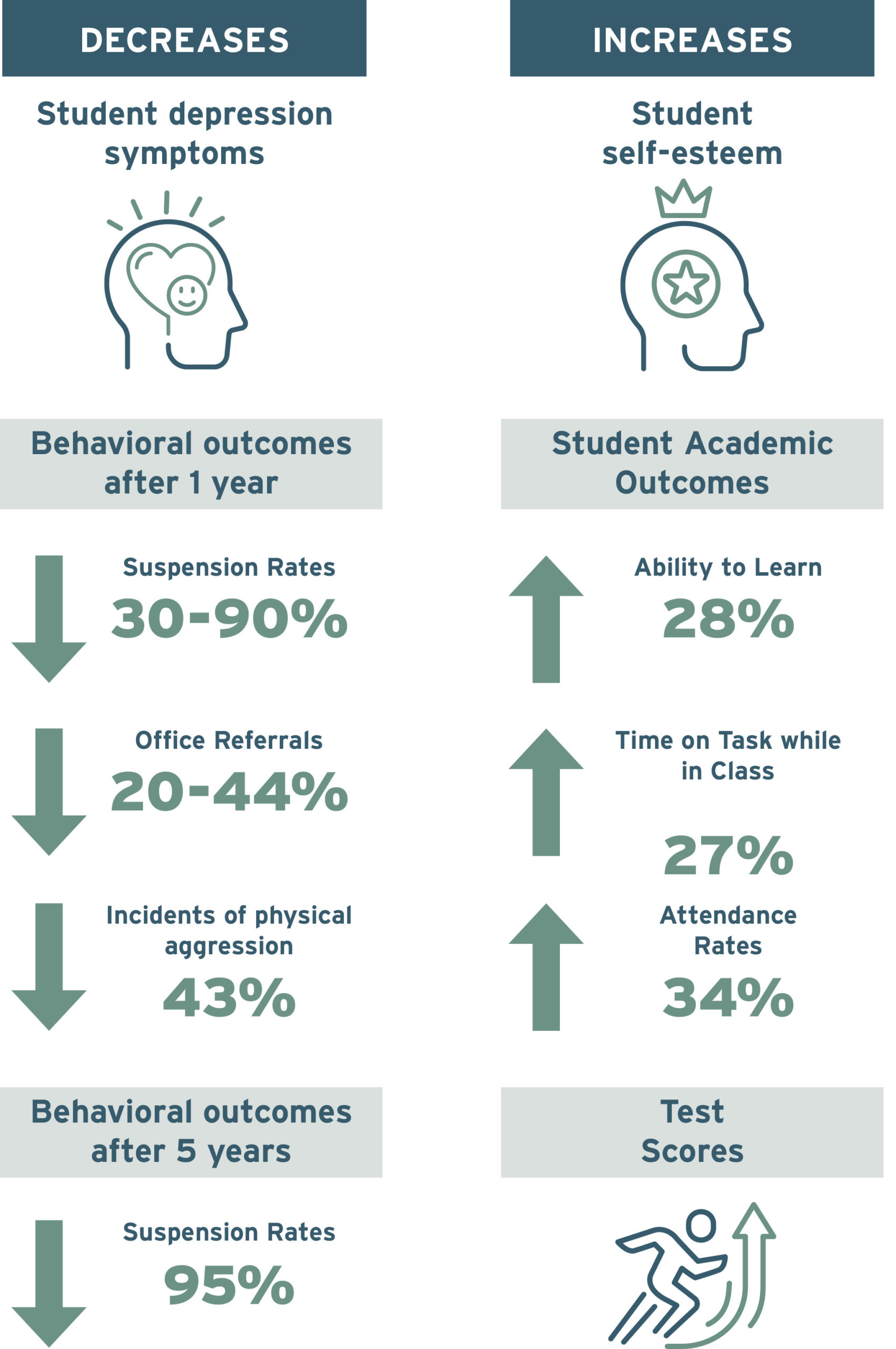
Source: Dorado, et al (2016) & Stevens (2012)


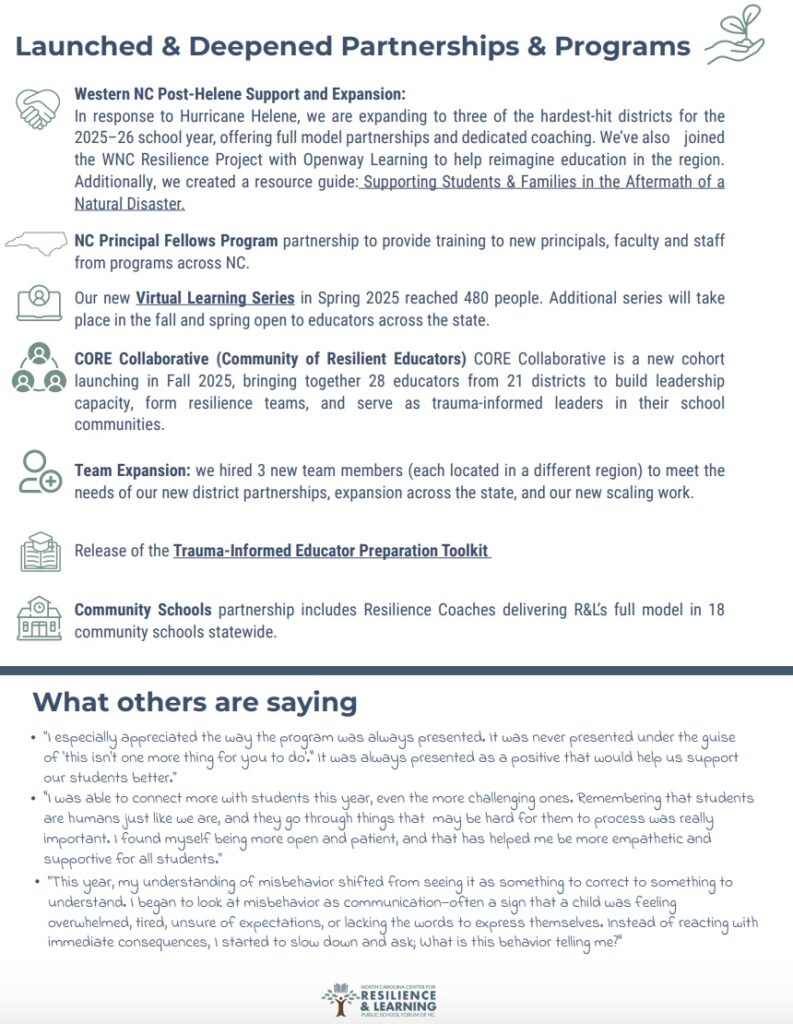
What Others Are Saying
  • Trauma-Informed Mindest Shift

    “Before, when seeing behavior problems, it was about what’s wrong with me as a teacher or wrong with this kid; now I am asking why — where is the behavior coming from? And how should I respond to it? Having those conversations in the forefront has helped teachers think differently about why students behave the way they do and how to respond.”
    Classroom Teacher in Johnston County Public Schools
  • Building Community

    “Learning about [the trauma-informed strategy of] restorative practices for students to rebuild relationships when things have gone wrong, even with teachers and students together – this has led to such growth as a community and a classroom. We are able to get more teaching done and focus on academics; instead of something stewing and building, we’ve been able to discuss it and address it and create a plan and build it back up into something positive.”
    Classroom Teacher in Lee County Schools
  • A Shift in Mindset

    “It may feel overwhelming because it is another thing you are learning but to really remember that resilience is not what you do but how you do it – it is a mindset shift rather something new you have to do.”
    Student Services Staff in Lee County Schools
  • The Beauty of Partnership

    “From day one, the Forum invests their time and wants to craft this work to the needs of [our school]. Together, we created an action plan based on the true needs of the school. The Forum did not come to us with a view of ‘how can we fix the school’ and there was not a ‘one size fits all’ which creates gaps rather than closing gaps.”
    Principal in Nash County Public Schools
  • Student Academic Success

    “This program has given us resources and tools to educate our students in dealing with situations so that they are more successful with their academics.”
    Classroom Teacher in Jones County Schools
  • Transformational Change

    “The collaboration with the Center for Resilience and Learning has helped our school feel like a different school now than when I first started.”
    Principal in Johnston County Public Schools


  • Email
  • Facebook
  • LinkedIn
  • Twitter

Copyright © 2026 · Public School Forum of North Carolina

All Rights Reserved · Website by Tomatillo Design