Our Mission
Our mission is to build resilience and success for all North Carolina students and educators. Using school-specific training and coaching, we seek to create safer and more supportive schools that champion the whole child, reduce the impact of stress and trauma, and foster school communities where all feel valued.
What We Do
The North Carolina Center for Resilience & Learning provides a “whole child, whole school” framework to equip and support North Carolina schools and districts in creating trauma-informed learning environments through specialized training and technical assistance.
How do we do this?
By facilitating a school-wide culture shift from observing and asking “What is wrong with you?” to “What might have happened to you?”
This culture shift is achieved through professional development and ongoing coaching that:
- Teaches and supports social-emotional or coping skills
- Builds a positive school climate centered on supportive relationships where kids feel physically and emotionally safe so they can focus on learning
- Prioritizes staff wellness through self-care and collective care.
Our Impact
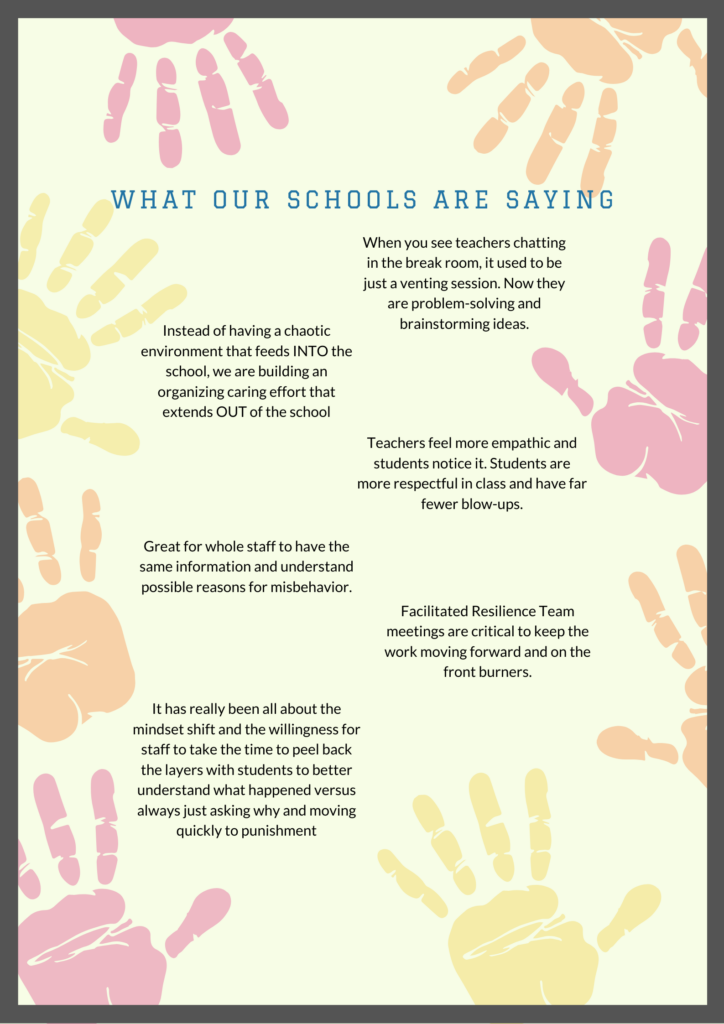
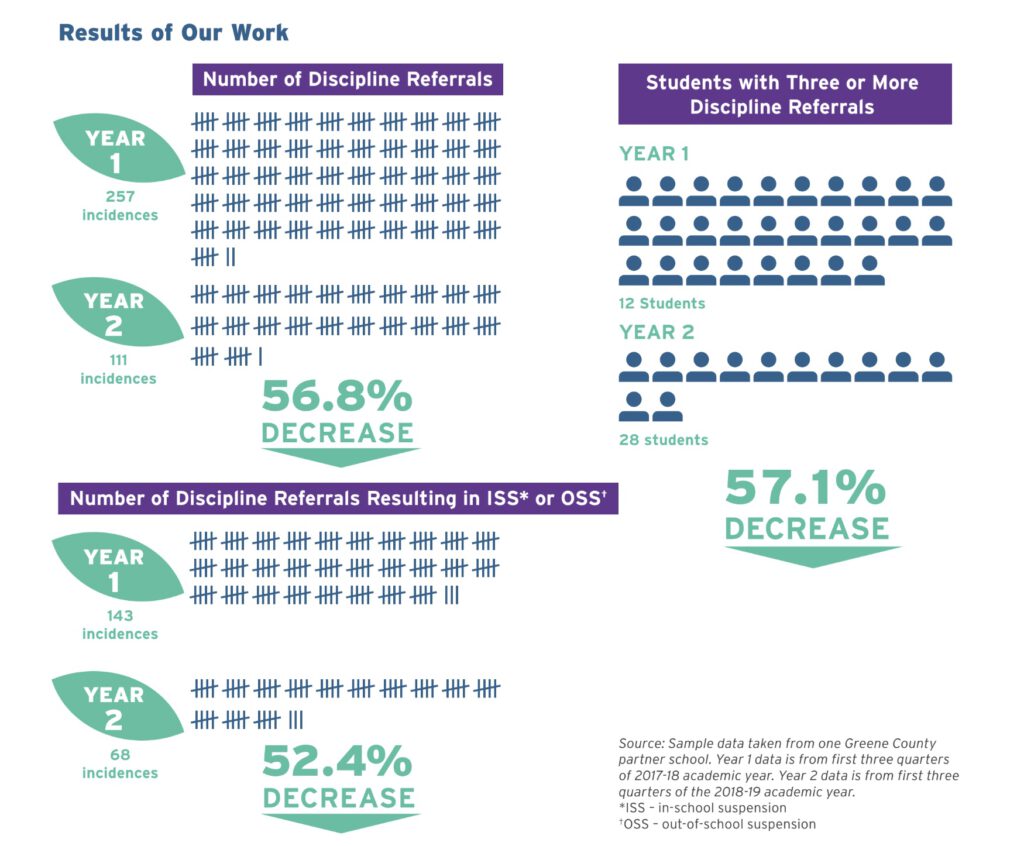
To learn more about our reach and impact, visit our Impact page.
Our History
The NC Center for Resilience & Learning (the Center) is an initiative of the Public School Forum of North Carolina. The Center is supported by the work of the Forum’s Study Group XVI conducted in 2015-2016. The Study Group involved more than 100 stakeholders representing business, education, government, academia and the non-profit community, who continued the Forum’s practice of engaging with major, timely education issues by bringing together subject matter experts to distill collective knowledge on crucial topics related to public education in our state. Three issues – racial equity, trauma and learning, and low performing schools – were the focus of Study Group XVI’s activity.
Recommendations from the committee on trauma and learning included:
- maximizing the impact of opportunities under the Every Student Succeeds Act to support practices that recognize the impact of adverse childhood experiences on learning
- Designing “on-ramps” for educators to increase awareness of ACEs, their impact on learning, and appropriate interventions
- Implementation and evaluation of pilot programs
- Sharing data and related resources and creating statewide policy to guide schools’ work addressing the impacts of ACEs on learning
The Center launched under its former name, NC Resilience & Learning Project, in 2017 as a way for the Forum to take action on these recommendations. The Center began as a pilot in two school districts in the 2017-2018 school year and has continued to expand, providing varying levels of training and consultation to more than 30 districts across the state as of the 2022-2023 school year.
The Research Behind Our Work
The CDC-Kaiser Permanente Adverse Childhood Experiences (ACE) Study, conducted from 1995-1997, documented the high prevalence of traumatic experiences in childhood. Among respondents, 28% were physically abused as children, 21% were sexually abused, 27% lived in households where substance abuse occurred, and 13% lived in homes where the mother was treated violently. One in five children experienced traumatic events in three or more categories of ACEs (Anda et al., 2006).
Too often, students arrive at school besieged by the neurological response that can result from these experiences, as high levels of stress hormones over prolonged periods cause chemically toxic effects on regions of their brains that deal with problem-solving and decision-making (De Bellis & Zisk, 2014). Educators see ACEs manifest in negative and disruptive behavior, but often, this results from students functioning in a constant state of high alert. As a result of ACEs and their consequent effects on brain functioning, students may experience a trauma response that causes them to “fight” (engage in violence or aggression), “take flight” (absenteeism; dropouts), or “freeze” (shut down; withdraw).
Unfortunately, schools and school systems typically focus on the behavior itself rather than on scrutinizing and responding to aspects of students’ experiences that shape it. Too often, teachers and school leaders respond to misbehavior by asking, “What’s wrong with you?” when instead they could be asking, “What happened to you?” The result is to punish students at their most vulnerable moments, when they are most in need of understanding, support, and help in building new coping skills.
Research has shown that students who experience three or more ACEs score lower than their peers on standardized tests; and are 2.5 times more likely to: fail a grade; are placed in special education more frequently; are more likely to be suspended and expelled; and are more likely to experience numerous long-term physical and mental health issues (Wolpow et al., 2009).
This group of high-need students, which includes significant numbers of low-income and minority students, students with disabilities, and English language learners, suffers disproportionately under traditional approaches to school discipline. Tragically, these students are among the most in need of school-based supports and interventions to help them build resilience and persist through adversity.