A Seat at the Table: Cultivating Collective Care as a Community
By Resilience Coach: MKayla Nelson
Nestled in the mountains of Avery County, our rural school community is built on connection, tradition, and neighbors who show up for one another. In recent years, that spirit has been tested. Following the impact of Hurricane Helene, families, educators, and students alike have navigated disruption, recovery, and the ongoing work of rebuilding.
In a community where schools serve as both anchor and gathering place, supporting the well-being of educators is not just a district-level priority; it is a collective responsibility.
When a rural community rallies around its teachers, offering care, nourishment, and space to restore, it strengthens not only the adults in the building but the resilience of the entire community.
At Cranberry Middle School, that belief has moved from intention to action. With the leadership of the school’s Resilience Team and the partnership of the Parent Support Team, collective care has taken shape in tangible ways from duty-free lunches to shared meals and acts of appreciation that nourish both body and spirit. In the midst of recovery and renewal, this rural community is demonstrating what it means to pull up a seat at the table and care for the adults who care for its children.
Food as a Community Builder
Across cultures and generations, food has always been a connector. Commensality, the act of eating together, suggests that shared meals foster social bonding and emotional well-being. When people eat together, the experience can increase feelings of trust and connection, strengthening relational ties within a group.
In schools, something powerful happens when adults sit together without an agenda. Conversations shift from logistics to laughter. Isolation softens into solidarity. A shared table becomes a space for storytelling, problem-solving, and mutual encouragement.
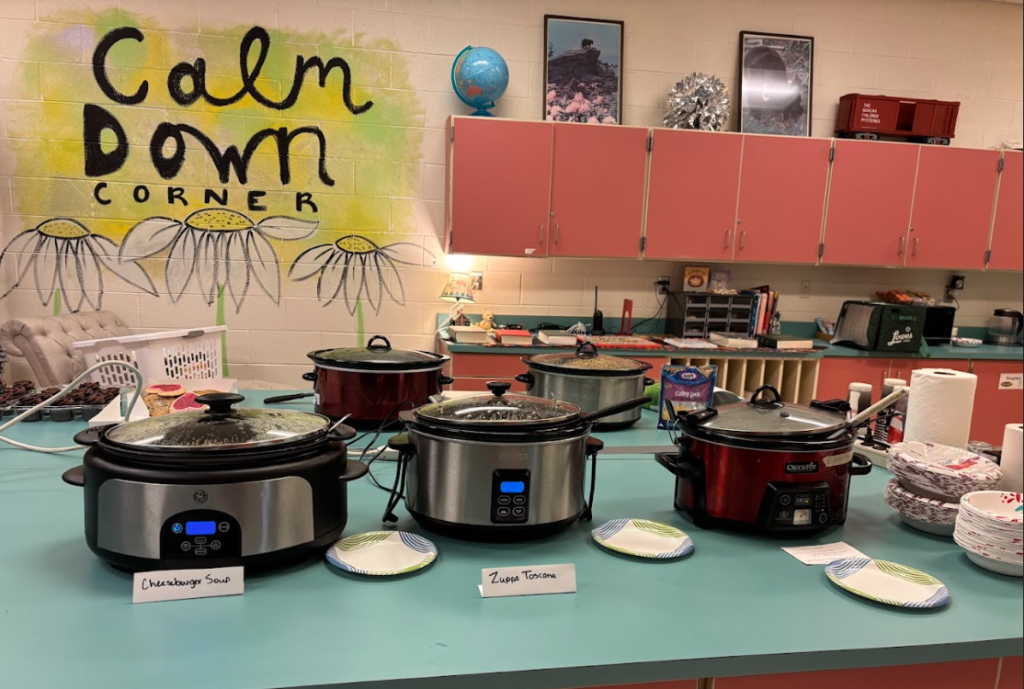
At Cranberry Middle School, reclaiming the lunch period as a protected, duty-free space, supported by the Parent Support Team, has helped transform lunch from a supervisory task into a restorative opportunity.
Why Restoration Matters in Education
Teaching is deeply relational and cognitively demanding work.
Research consistently shows that social support in the workplace serves as a protective factor against stress, helping preserve well-being and job performance in high-demand environments.
When adults feel supported by their community, their capacity to regulate, respond thoughtfully, and remain patient increases.
Neuroscience reminds us that chronic stress narrows attention and limits cognitive flexibility. In contrast, moments of safety and connection expand thinking and creativity. For educators, this translates directly into instructional impact
Rested and supported adults are more likely to:
- Respond calmly to challenging behaviors
- Build stronger student relationships
- Maintain clarity in instructional decisions
- Model emotional regulation
Protecting time for connection and nourishment is not an extra initiative; it is a Tier 1 strategy for sustaining effective teaching.
Together at the Table
At Cranberry Middle School, collective care comes alive through the generosity, creativity, and dedication of the community. Without a dedicated PTO, parents and families have stepped in to support initiatives led by the Resilience Team, helping to protect teacher time, create restorative spaces, and foster connection among staff.
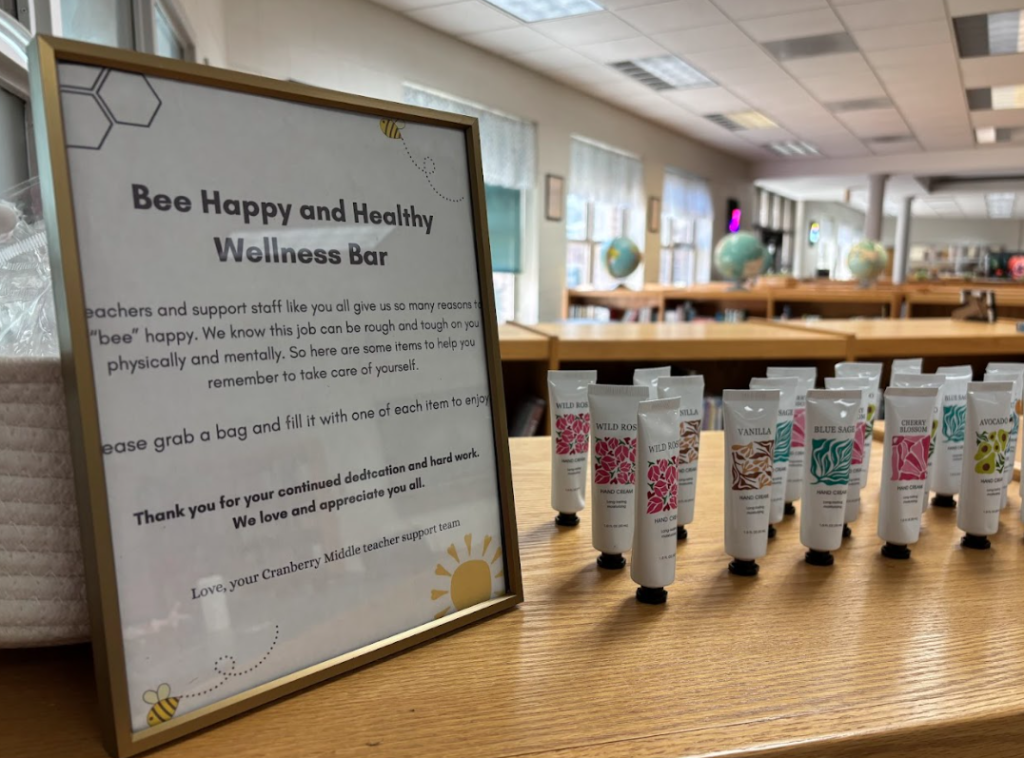
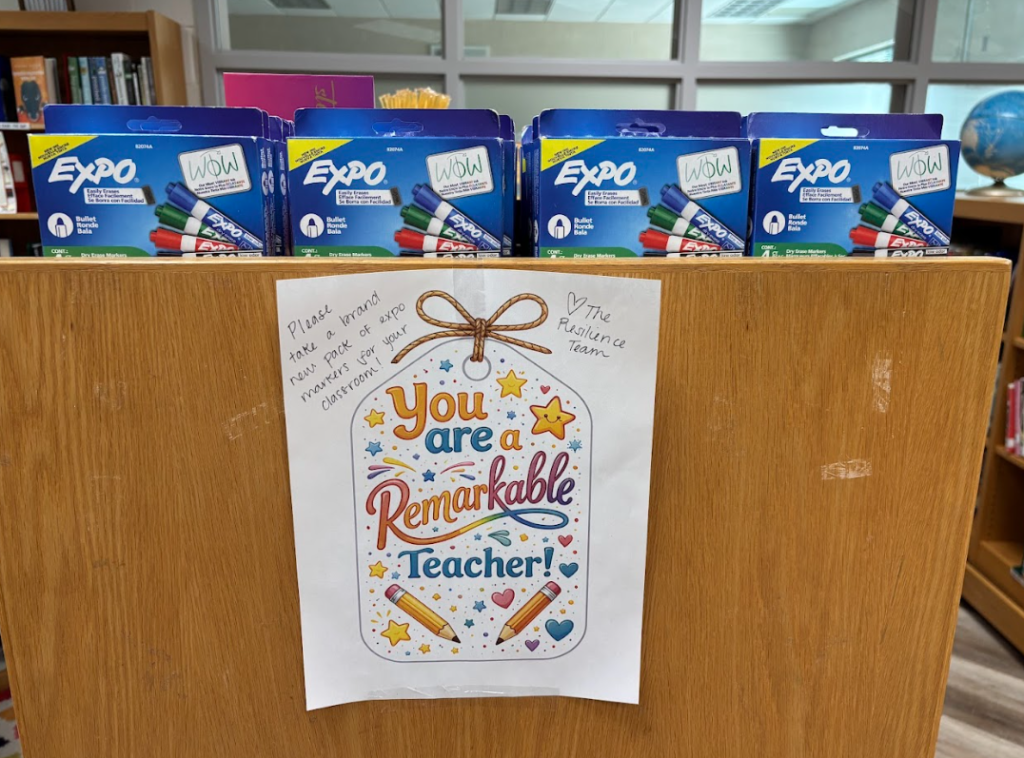
This February, parents went above and beyond, organizing donations and purchasing items that supported the Resilience Team’s vision of cultivating collective care. From homemade meals and treats to thoughtfully selected self-care supplies, these contributions transformed ordinary lunch periods into restorative experiences, giving teachers time to pause, connect with colleagues, and recharge. This also included replenishing everyday classroom supplies that frequently run out by mid-year, like Expo markers, helping reduce stress and allowing teachers to focus on instruction rather than scrambling for materials. Fill it yourself self-care baskets with options of herbal teas, lotions, shower steamers, eyemasks, and supplements served as tangible reminders that staff are seen, valued, and supported.
One especially meaningful moment came when the Resilience Team hosted a gratitude‑focused lunch. During the meal, staff were invited to write gratitude notes and words of encouragement to one another, turning the lunch into a shared restorative and relational experience.
Michelle Lyerly from the Parent Support Team shared, “Our parent support group is focused on taking care of the people who take care of our kids. Providing lunch and time for staff to all sit together is a simple way to say thank you, and this effort reflects our community’s commitment to supporting the teachers and staff at Cranberry Middle School.”
Research on gratitude practices in the workplace finds that both expressing and receiving gratitude can improve emotional well‑being, strengthen social bonds, and enhance resilience. Studies show that gratitude interventions, such as writing notes of appreciation, are associated with increased positive affect, improved psychological functioning, and stronger workplace relationships. These practices help build what researchers call “psychological safety,” where individuals feel valued and connected to their peers, reducing stress and supporting long‑term engagement.
Dr. Jamie Johnson, principal at Cranberry Middle School, expressed, “We are incredibly grateful for our Parent Support and Resiliency Team for providing duty-free lunches for our teachers. This thoughtful gesture has meant more than you know. Our staff has felt genuinely appreciated, and the time to pause, recharge, and connect, which has strengthened both individual well-being and our collective care as a school community.”
These acts were not about extravagance. They were about intention, thoughtfulness, and shared responsibility. By showing up in practical ways, preparing food, organizing donations, replenishing classroom supplies, and creating small but meaningful touches, parents helped the school proactively address teacher stress and burnout. In a rural community still navigating the long-term impact of Hurricane Helene, these gestures carried even deeper significance, demonstrating that resilience is not just about rebuilding structures but about nurturing the adults who care for students.
Every shared meal, donated item, restocked supply, and note of gratitude is a reminder that the adults in the building are supported by a community that shows up consistently, warmly, and generously. Together, parents and the Resilience Team are creating a culture where teachers are nourished, valued, and equipped to sustain the important work of teaching.
A Community Responsibility
Education in North Carolina does not happen in isolation. Schools are gathering places, safe spaces, and symbols of stability. When families partner with school teams to support educators, whether by covering lunch duty, preparing meals, or organizing appreciation efforts, they reinforce a powerful truth: caring for educators is community work.
At Cranberry Middle School, a seat at the table represents more than a meal. It represents belonging. It represents restoration. It represents collective responsibility.
When educators are nourished, emotionally and physically, they return to their classrooms with renewed patience, focus, and compassion.
In a community that has weathered storms, both literal and figurative, this is what resilience looks like: Pulling up a chair, serving with care, and ensuring that those who nurture children are supported at the table.